I’ve been running a lot in Paris lately, and it’s changed how I experience the city. When you’re moving through an urban environment on foot—really moving, not just walking between metro stops—you stop being able to ignore it. The air, the shade, the traffic, the noise. It all hits at once.
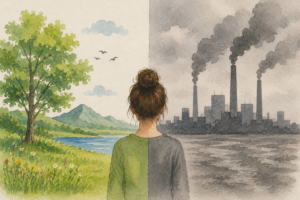
Paris has been quietly remaking itself for over a decade. Under Mayor Anne Hidalgo, the city has expanded bike lanes, pushed cars out of certain areas, and pedestrianized stretches of the Seine. The numbers are striking: more than 800 miles of new bike lanes since 2011, a 40% drop in car traffic and pollution, a 25% reduction in local emissions between 2004 and 2018. The Place de la Concorde—one of the city’s most car-choked squares—is slated for redesign, with more greenery and pedestrian space replacing the asphalt dominance.
These things usually get discussed as statistics, or policy wins, or emissions targets. But when you’re running through them, they show up differently.
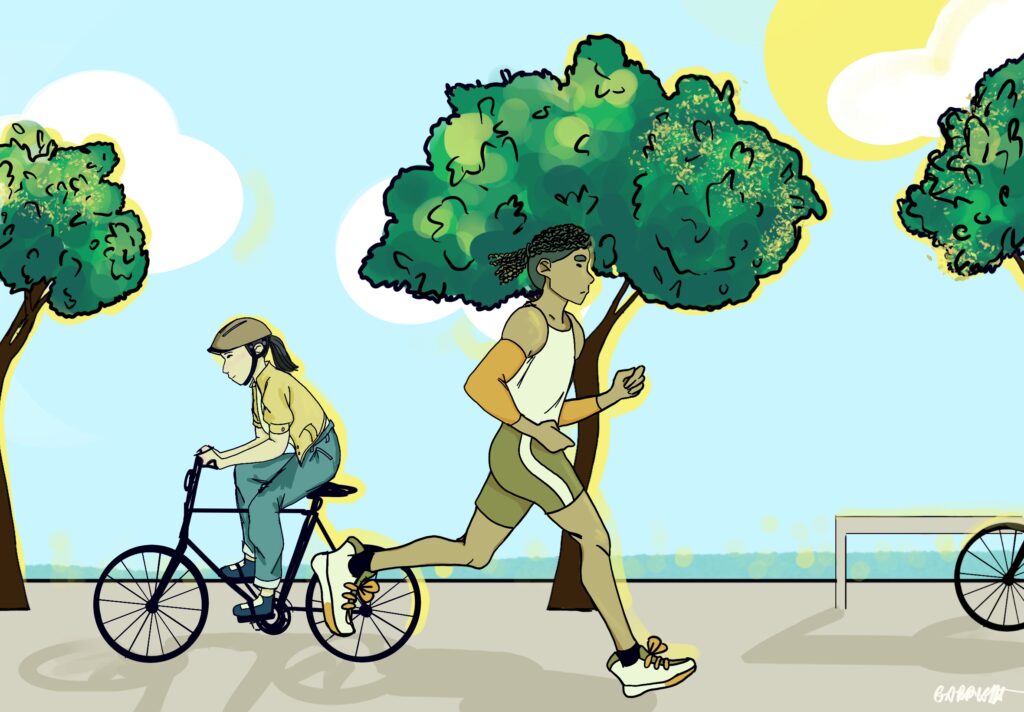
Along the Seine, the absence of cars doesn’t just reduce pollution—it changes the whole feeling of the space. What used to be a roadway is now somewhere people can exist: cyclists, walkers, runners. The river is just the river again. Elsewhere, the contrast is sharper than you’d expect. A wide boulevard full of traffic concentrates heat and noise in a way that’s almost physical. Then you turn onto a shaded street lined with trees and it feels ten degrees cooler. Urban policy tends to sound abstract until you’re breathing it.
A lot of these changes accelerated ahead of the 2024 Summer Olympics, which pushed investment in cycling infrastructure, pedestrian zones, and transit. The framing was usually about transportation. But the effect is also about how the city feels to move through.
For runners, the difference is immediate. Running beside traffic versus running along a car-free embankment isn’t a subtle distinction—it’s air quality, noise level, temperature, the simple fact of being able to breathe at a decent pace. Cities are increasingly where climate policy plays out in practice: redesigned streets, more trees, fewer cars. The changes happen gradually. But running through Paris, they’re easier to notice than you’d think. The policy becomes physical. It’s in the temperature of the pavement, the way air moves down a shaded street, the sounds—or the lack of them—coming off the water.
Works Cited
City of Paris. Conférence de presse : Anne Hidalgo dévoile le projet lauréat pour le réaménagement de la place de la Concorde. 27 Mar. 2025.
OECD. The Legacy of the Paris 2024 Olympic and Paralympic Games: Upping the Game. OECD Publishing, 2025. https://doi.org/10.1787/d7938b7f-en.
Time. “Anne Hidalgo — TIME100 Climate 2024.” TIME, 2024. https://time.com/collections/time100-climate-2024/7172527/anne-hidalgo-2/.
The views and opinions expressed are those of the authors and do not necessarily reflect nor represent the Earth Chronicles and its editorial board.