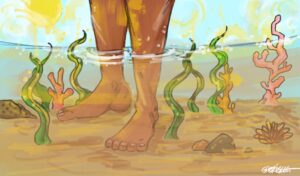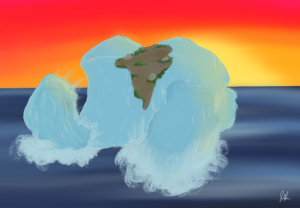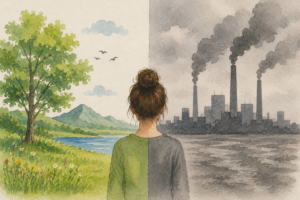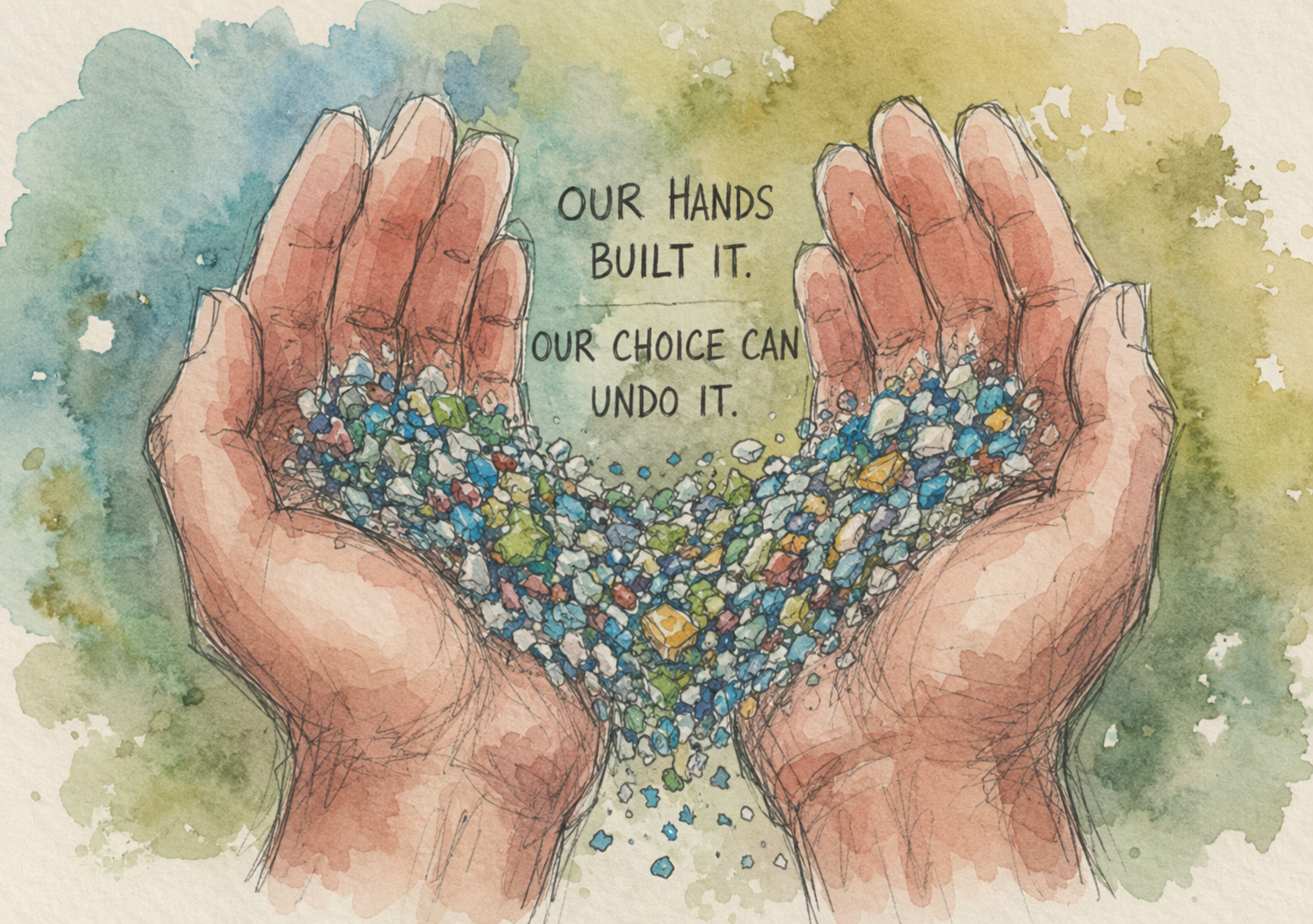
Just like Rome, the newest empire built out of plastic known as “The Platisphere” was not built in a day. The empire of Platisphere is being built in the corners of the planet, from a single plastic bag being found at the bottom of the Mariana Trench and the 1.8 trillion pieces of trash found in the Great Pacific Garbage Patch. Just like a tyrant, the Platisphere is conquering oceans near and far. However, the Platisphere is not made of stone or marble; rather, its building blocks are tiny microplastics found in everyone’s homes: polyethylene, polypropylene, and nylon.
The Guinness Book of World Records should include the Platisphere on its records as the fastest growing ecosystem ever, having been developed in only 60 years, coinciding with the rise of plastic production in the 1950s and 1960s. Biofilm is a focus of new marine biology studies; it is a thin, sticky coating of bacteria and other microorganisms that grow on the surface of plastic. One week after a piece of trash is dropped in the water, the building process begins with a layer of biofilm and is considered an official part of the ecosystem after 6 months. This plastic provides an unnatural and permanent foundation that allows biofilm bacteria and invasive coastal species to thrive in the open ocean, disrupting other coastal animal habitats and worldwide ocean food-webs. These invasive coastal species can now do something that has never been done before: they can conquer and colonize the entire open ocean. This abnormal migration has mostly culminated in the formation of a massive, artificial habitat known as the Great Pacific Garbage Patch.
The Great Pacific Garbage Patch is no longer just a pile of trash; it is a busy metropolis for plastics and bacteria. Certain bacteria have learned how to eat their fellow citizens, the plastics, while other bacteria have learned to travel with the plastics to different continents, spreading to other parts of the world. Man-made materials and biological systems are now so intertwined that they can never be separated, and future geologists will find our signature written on the Earth’s DNA for the rest of time.
A plastic bottle discarded along the coast of Africa can drift across the ocean and reach the shores of South America or any other country in just a short period of time. Along the way, it can act as a vessel, carrying invasive species and harmful pathogens across vast distances. Discover Wildlife states that this sort of transportation is like a “disease superhighway”, where “Plastic debris commonly accumulates near wastewater outfalls, mariculture zones and river mouths – exactly where pathogens are most likely to encounter it.” The plastic that makes up the Platisphere acts like tiny islands and rafts for trading these bacterial and viral goods across the world. Instead of finding a letter in a glass bottle, it’s very possible that the piece of trash you pick up from the ocean has a viral disease contained within it. This new Rome has a military that can easily travel to any continent that it wants, and with new evolutions to come within the Platisphere, their military could be very dangerous to humanity by introducing diseases, invasive species, and evolved bacteria into our communities.
Rome was built on specifically conquest; the Platisphere is mainly based on displacement. Bacteria created and evolved by the Platisphere compete with other biological organisms for food and space. The Platisphere will never be able to “fall” like Rome did, as plastic takes long periods of time to decompose, or it doesn’t truly decompose at all and instead breaks down into tiny microplastics that never degrade. Certain solutions to “fight” back against the organisms developing in the Platisphere are to use the specific type of bacteria (studied in a field called microbial degradation) that have evolved to eat the plastic found in the Platisphere. A way that anyone could help the fight against the Platisphere empire, even in the comfort of their own homes, is to start using microplastic filters in their laundry, support brands that recycle their plastic, or publicly support and advocate for the scientific innovations—like using the evolved bacteria to eat plastic—that could help remove microplastics from the ocean.
Humans are the emperors of waste, and we could be considered the “tyrants” of this modern era. By providing the materials for an artificial ecosystem, we have introduced materials into the ocean that natural systems are now being forced to adapt to. We have traded the health of our oceans and natural ecosystems for an artificial Rome that does not fall. This new Rome, the Platisphere, may outlive humans as a species itself. Neither Rome nor the Platisphere was built in a day, and they were both built by our hands. Our only choice now is to decide if we have what it takes to make the Platisphere fall once and for all.
Works Cited
Du, Yuhui, et al. “A Review on Marine Plastisphere: Biodiversity, Formation, and Role in Degradation.” Computational and Structural Biotechnology Journal, vol. 20, 2022, pp. 975–988, https://www.sciencedirect.com/science/article/pii/S2001037022000459. Accessed 15 Feb. 2026.
Gibbens, Sarah. “Plastic Bag Found at the Bottom of World’s Deepest Ocean Trench.” National Geographic Education, 23 Apr. 2025, education.nationalgeographic.org/resource/plastic-bag-found-bottom-worlds-deepest-ocean-trench/. Accessed 15 Feb. 2026.
Lebreton, L., et al. “The Great Pacific Garbage Patch Counts 1.8 Trillion Pieces of Plastic Debris.” NCBI Research News, U.S. National Library of Medicine, https://www.ncbi.nlm.nih.gov/search/research-news/4120/. Accessed 15 Feb. 2026.
Lippsett, Lonny. “Behold the Plastisphere.” Oceanus, Woods Hole Oceanographic Institution, https://www.whoi.edu/oceanus/feature/behold-the-plastisphere/. Accessed 15 Feb. 2026.
Morris, Thomas. “Hitchhiking Round the World on a Plastic Bottle.” The Marine Diaries, https://www.themarinediaries.com/tmd-blog/hitchhiking-round-the-world-on-a-plastic-bottle. Accessed 15 Feb. 2026.
Phelan, Joseph. “The Plastisphere.” Discover Wildlife, https://www.discoverwildlife.com/environment/plastiphere. Accessed 15 Feb. 2026.
“How Long Until Plastic Decomposes?” Chariot Energy Blog, Chariot Energy, https://chariotenergy.com/blog/how-long-until-plastic-decomposes/. Accessed 15 Feb. 2026.
The views and opinions expressed are those of the authors and do not necessarily reflect nor represent the Earth Chronicles and its editorial board.