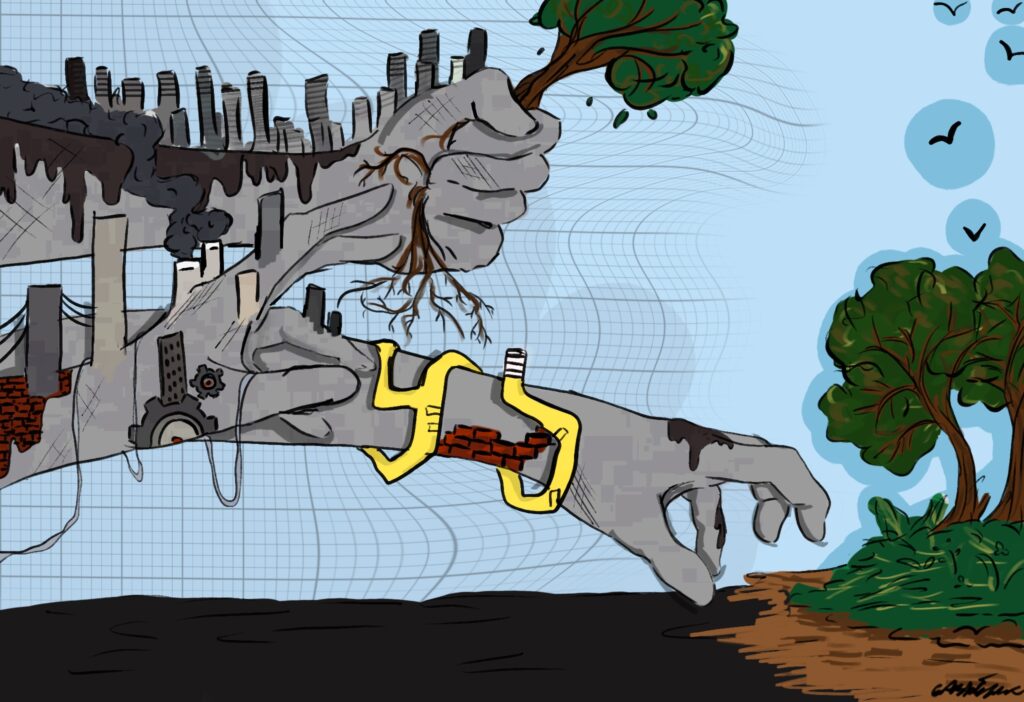
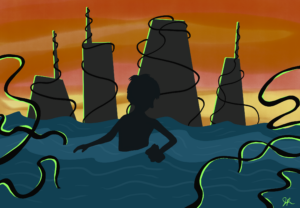
You don’t notice the wild until it is gone. One day, you drive to school, and the grassy pasture next to your neighborhood is smothered in concrete. Where tall fronds once waved in the cool summer breeze, a layer of flat, artificial asphalt will stand. The billboard facing the road advertises a new business plaza featuring a car wash, a restaurant, and a few cafes. All signs of life are gone. Only the endless blacktop remains.
The construction vehicles come next, digging up the sidewalks and exposing dry, crumbly dirt to the world. They set up plumbing systems and electrical wiring, and lay out the groundwork for the buildings. Then, wooden frameworks are put up, the ribs of each structure sticking out of the ground. Workers toil away on the rooftops, even though it is a sweltering afternoon. Each day, you see newly revealed pieces of structures, painted in neutral tones—safe, modern colors. Together with the sidewalk, the new plaza is blinding to the naked eye, sunlight glinting harshly off of each surface.
They try to relieve the problem, bring back the life that was destroyed when concrete was poured over the land. But the newly planted saplings are tiny and sparse compared to what came before. Their parched, desolate branches barely shade the sidewalk, as if they have been planted in a desert. The city planners and urban landscapers, try as they might to create “green” spaces, can’t replace what they mowed over.
Although the new construction projects bring more people, more roads, and more money, you can’t help but remember what came before. The rustle of the leaves at night, the chirping of the songbirds, the comforting presence of that grassy space, something you knew would be there every day until it wasn’t.
There are more urban developments cropping up around your city, too quickly to keep track of. Another luxury grocery store there, another shopping plaza here. Soon there will be little left of the wild areas around you—because when it comes to these things, it’s not the question of if or when they will disappear, but the question of “What’s next?”
The views and opinions expressed are those of the authors and do not necessarily reflect nor represent the Earth Chronicles and its editorial board.

Comments are closed.