The Truth About Unethical Farming Practices
When entering the produce section in a grocery store, most people are on the hunt for the freshest figs or the brightest broccoli. Not a thought crosses their minds about the problematic ordeal farm-grown fruits and vegetables have been through to get to their final destination on the shelf. It is an unfortunate reality that farming practices– especially those involving industrial farms– have evolved to include harsh treatment, exploitation, and a life of severe poverty for almost all of their employees.
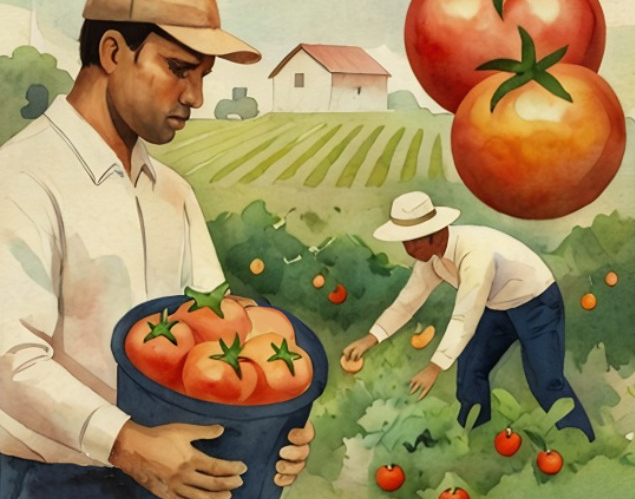
What lies behind the simple action of biting into a juicy tomato is a farmer, often an undocumented immigrant, who works in excruciating heat with barely enough pay to support their basic needs yet hoping and dreaming of rising above the poverty line. The harsh conditions that accompany this job description are ones that workers are usually forced to endure as their status as immigrants limits their employment opportunities. Furthermore, their lack of documentation and simultaneous fear of deportation contribute to unreported injury and mistreatment.
Farmworkers are the cornerstone of the American foodsystem; they produce, manufacture, and supply the crops that will eventually become meals for hundreds of millions of people daily. The fact that they endure such terrible circumstances just to earn barely-livable wages is a problem that should be talked about on a national level, but why is it often overlooked? Truthfully, few people are motivated to take on such mentally and physically taxing jobs unless they are in dire need of them. In the fields, harvesting crops is coupled with back aches from being bent over for long hours and constantly hoisting around large, heavy buckets. Additionally, when pesticides are being applied to the land, the workers are defenseless against the toxic chemical spray. Agriculture workers, while they are the true backbone of the food industry, will unfortunately continue to endure harsh conditions and low pay until the occupation is reformed.
In order to get a better understanding of this problem from a more first-hand viewpoint, I decided to explore the moving story of the Immokalee tomato farmers. The city of Immokalee, Florida, is known for the mass amounts of tomatoes it produces each year. However, the workers that are the labor behind this process (28% of the town’s residents) fall below the national poverty line and contribute to the extremely high poverty rate in the area (Knoerr). The daily life of an Immokalee farmworker consists of an early morning before the sun has even risen, spending hours and hours filling buckets with pounds of tomatoes before loading them into a truck that transports them to the processing facility, and all in the scorching Florida sun. Stemming directly from personal difficulties with this intense environment, the Coalition of Immokalee Workers (CIW) has banded together to raise awareness about the adversities of Immokalee and combat the structural problems in the farming industry. Striving for a fairer food industry, the CIW has committed to lobbying for farmworkers’ rights all across the United States. They have also negotiated with top supermarket chains like Whole Foods and Trader Joes and coerced them to recognize the hours that the workers spend on the farm and pay them adequate compensation While the problems entrenched in the farming industry will take many years to solve completely, groups like the CIW are putting farmworkers one step closer to success.
Steps Forward:
As the general public, there are many things that we can do to both call attention to and support the problematic conditions that industrial farmworkers face. The Farmworker Justice Organization is one of many organizations that has the mission of uplifting the workers by improving their access to healthcare, providing economic resources, and restructuring the work day. They also support and collaborate with workers during lawsuits, helping them advocate for a better life. Organizations like these are looking for something as simple as a small donation to allow them to extend their reach to migrant farmworkers everywhere. So, next time you go to the grocery store and pick up something from the produce section, make it a priority to recognize the hard work and sacrifice that got the fruits and vegetables there in the first place.
Works Cited
“FJ.” Farmworkerjustice.org, 2024, farmworkerjustice.org/en. FoodPrint. “Agricultural Workers and Labor Issues in the Food System.” FoodPrint, 8 Oct. 2018, foodprint.org/issues/labor-workers-in-the-food-system/.
Knoerr, Julia. “Immokalee’s Farmworkers Strive for Food Sovereignty.” Civil Eats, 14 June 2023, civileats.com/2023/06/14/the-struggle-for-food-sovereignty-in-immokalee-florida/.
The views and opinions expressed are those of the authors and do not necessarily reflect nor represent the Earth Chronicles and its editorial board.