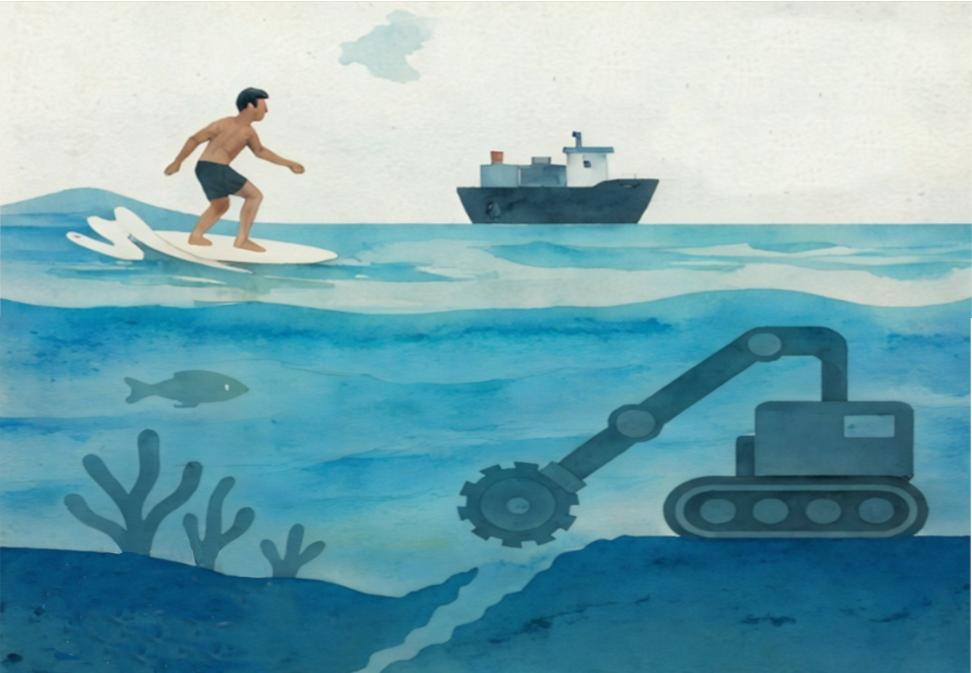
We pay close attention to everything happening above the waters, from small moments, like surfers gliding through water, to major events, like political affairs featured in our daily morning news. But do we ever stop to think about what’s happening below the shadows of these activities?
Beneath the ocean’s surface, in the absence of sunlight, lies a world inaccessible to mankind. It’s where the world’s coldness, darkness, and silence converge. The deepest grounds of the ocean are just as alive as it is above the surface, full of undiscovered beauties of delicate creatures. Rich varieties of metals, including cobalt, nickel, and copper, are being targeted by companies and the metal mining industry to power things like electric cars, wind turbines, and smartphones. The demand to mine these metals is growing fast, but the cost of that process could leave a permanent and unforgivable scar on our seabed and the ocean’s ecosystems.
The Clairon-Clipperton Zone and The Beginning of The Crisis
The Clairon-Clipperton Zone (CCZ), a massive stretch of the Pacific Ocean floor between Hawaii and Mexico, is currently in the focus of this crisis. This zone lies within international waters, covers over 4.5 million square kilometers, and holds most of the world’s metals. These huge amounts of metals didn’t form overnight though. They began as tiny fragments such as bits of shells, shark teeth, or rocks on which metal particles grew and settled over time. Layer by layer, over millions of years, these alloys grew, absorbing tiny sea materials and particles and slowly kept building up into the rich mineral deposits that we have today.
Scientists first officially began studying the CCZ in the 1970s, when many countries ran early experiments to see how mining would work and affect the area. But it wasn’t until a recent expedition in 2023 that the long-term effects of these small experiments became clear. At a site in the CCZ last touched in 1979, researchers found permanent scars on the seabed, imprints of machinery and human activities. Even after decades of paused projects, we weren’t able to find the thriving and lively creatures we expected. Instead, it was only the remains of machines and harmed ecosystems. At that point, the message was clear: damage was done, scars were made, and there’s only so much we can do to recover from this situation.
UNCLOS and the ISA
The CCZ is in international waters which means it’s considered beyond any country’s legal territory and is managed under a global agreement policy called the United Nations Convention on the Law of the Sea, also known by its acronym, UNCLOS. This treaty was adopted in 1982 and it defines the rights and responsibilities of nations in their use of the world’s oceans, establishing legal guidelines on businesses and the care of the environment. It is an agreement between 167 countries that created international law for nautical territory.
To help manage this agreement, UNCLOS created the International Seabed Authority (ISA). The role of ISA is to balance environmental protection with the right to explore and use minerals on the seabed of the nation’s territory. But ISA is currently under pressure because companies in the metal mining industry are pushing for approvals without proper examinations and scrutiny. In order to prevent any illegal approvals or projects, researchers are asking for stronger protections, more research and time to assess the long-term risks before a large-scale mining activity begins by any country.
The Problem and The Chain Reaction
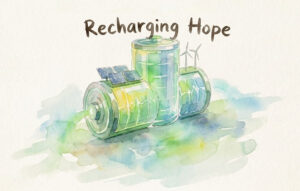
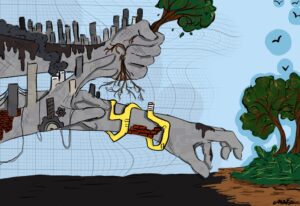
In this 21st century, we have been using metals with the intent to create a cleaner and more sustainable future. Electric vehicles, wind turbines, solar panels, and rechargeable batteries all depend on elements like the alloys found on seabeds. However, here’s the problem: the same technologies that were meant to lessen our harm on the planet and better the environment could be imposing inadvertent damage on these environments.
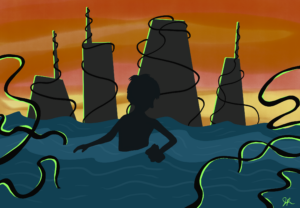
Mining nodules is not a gentle process. Machines as large as trucks are sent down to the ocean floor, where they suck up nodules along with the surrounding sediments like sand and rock. This creates massive underwater dust clouds that can travel across the ocean floor for miles. These underwater dust clouds block sunlight, suffocate marine life, and even release stored carbon back into the ocean, which could seriously disrupt the climate-regulating systems we depend on. Unlike forests and other biospheres, these deep-sea ecosystems do not recover easily. Some may never be able to recover from what has been damaged, especially by humans.
It is not only the ocean that is affected by seabed mining. It creates a chain reaction that may affect us as well. The deep sea might seem disconnected from our daily life, but it plays an important role in Earth’s climate and food systems. The organisms living in the ocean help cycle nutrients and absorb carbon dioxide. They also form food chains that support tuna, whales, birds, and many species important to commercial and subsistence fishing and aquaculture. We may not fully understand how deep-sea mining might interfere with our daily lives and other ecosystems, but early signs suggest that the risk is very high and our future is in danger.
It’s Not The End, It’s Just The Beginning
The seabed is not merely a repository of mineral-rich nodules, but an intricately connected component of the Earth’s biosphere. It has developed over millions of years through complex geological processes, yet our understanding of its structure, function, and ecological value remains in its infancy. Mining it now, with limited knowledge and no accurate proof to fix the damage done years ago, risks trading short-term benefits for long-term harm.
Sources:
“Locations of Clarion-Clipperton Zone.” USGS, www.usgs.gov/media/images/locations-clarion-clipperton-zone. Accessed 15 July 2025.
“Around 90% of Species in Prospective Deep-Sea Mining Zone Are Unnamed: Natural History Museum.” Around 90% of Species in Prospective Deep-Sea Mining Zone Are Unnamed | Natural History Museum, www.nhm.ac.uk/discover/news/2023/may/90-of-species-in-prospective-deep-sea-mining-zone-are-unnamed.html. Accessed 15 July 2025.
“Seabed Mining.” Wikipedia, Wikimedia Foundation, 5 July 2025, en.wikipedia.org/wiki/Seabed_mining. Accessed 15 July 2025.
“Evidence of Deep-Sea Mining Still Visible over Four Decades Later.” Natural History Museum, www.nhm.ac.uk/discover/news/2025/march/evidence-of-deep-sea-mining-visible-over-four-decades-later.html. Accessed 15 July 2025.
“Clarion–Clipperton Zone.” Wikipedia, Wikimedia Foundation, 25 May 2025, en.wikipedia.org/wiki/Clarion%E2%80%93Clipperton_zone. Accessed 15 July 2025.
US Department of Commerce, National Oceanic and Atmospheric Administration. “Deepwater Wonders of Wake: Deep-Sea Mining Interests in the Western Pacific: NOAA Office of Ocean Exploration and Research.” Deepwater Wonders of Wake: Deep-Sea Mining: NOAA Office of Ocean Exploration and Research, 18 July 2016, oceanexplorer.noaa.gov/okeanos/explorations/ex1606/background/mining/welcome.html#:~:text=Commercial%20deep%2Dsea%20mining%20is,being%20depleted%20from%20terrestrial%20sources. Accessed 15 July 2025.
Baraniuk, Chris. “Deep-Sea Mining Tech Advances – but Doubts Remain.” BBC News, BBC, 7 Mar. 2025, www.bbc.com/news/articles/cg45zwe0v0ro. Accessed 15 July 2025.
News, UH. “UH Research Argues Deep Sea Mining Could Threaten Midwater Ecosystems.” University of Hawaiʻi System News, 9 July 2020, www.hawaii.edu/news/2020/07/09/deep-sea-mining-threaten-ecosystems/. Accessed 15 July 2025.
The views and opinions expressed are those of the authors and do not necessarily reflect nor represent the Earth Chronicles and its editorial board.